


Description
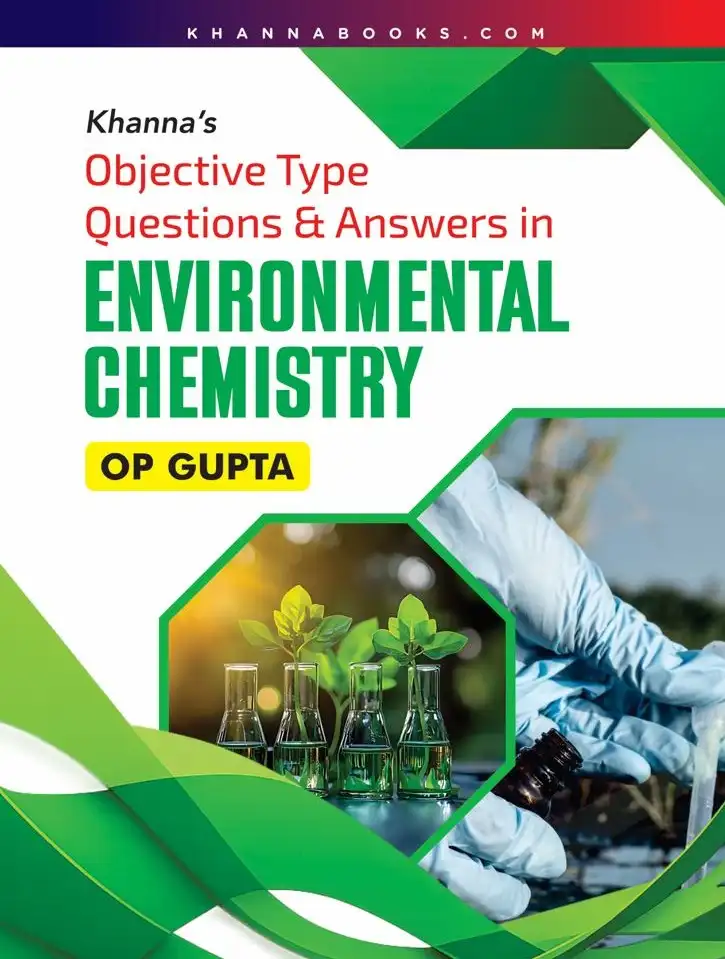
Khanna’s Objective Type Questions & Answers in Environmental Chemistry
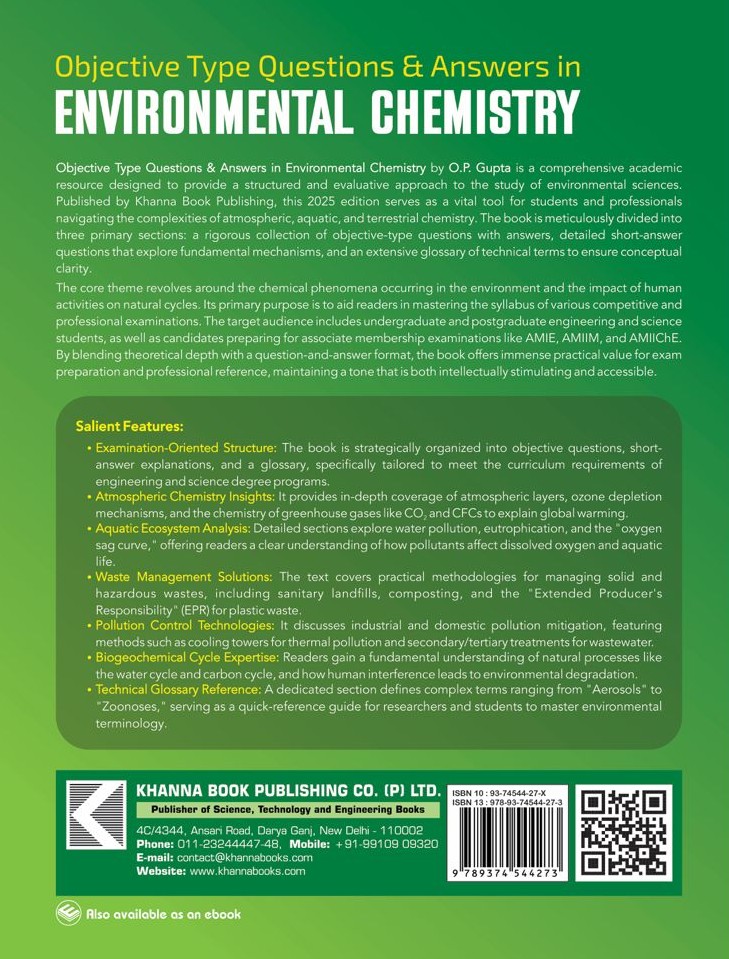
Objective Type Questions & Answers in Environmental Chemistry by O.P. Gupta is comprehensive academic resource designed to provide a structured and evaluative approach to the study of environmental sciences. Published by Khanna book Publishing, this 2025 edition serves as a vital tool for students and professionals navigating the complexities of atmospheric, aquatic, and terrestrial chemistry. The book is meticulously divided into three primary sections: a rigorous collection of objective-type questions with answers, detailed short-answers questions that explore fundamental mechanisms, and an extensive glossary of technical terms to ensure conceptual clarity.
The core theme revolves around the chemical phenomena occurring in the environment and the impact of human activities on natural cycles. Its primary purpose is to aid readers in mastering the syllabus of various competitive and professional examinations. The target audience includes undergraduate and postgraduate engineering and science students, as well as candidates preparing for associate membership examinations like AMIE, AMIM, and AMIIChE. By blending theoretical depth with a question-and-answer format, the boof offers immense practical value for exam preparation and professional reference, maintaining a tone that is both intellectually stimulating and accessible.
Salient Features:
- Examination-Oriented Structure: The book is strategically organized into objective questions, short-answer explanations, and a glossary, specifically tailored to meet the curriculum requirements of engineering and science degree programs.
- Atmospheric Chemistry Insights: It provides in-depth coverage of atmospheric layers, ozone depletion mechanisms, and the chemistry of greenhouse gases like CO, and CHCs to explain global warming.
- Aquatic Ecosystem Analysis: Detailed sections Explore water pollution, eutrophication, and the “oxygen sag curve,” offering readers a clear understanding of how pollutants effect dissolved oxygen and aquatic life.
- Waste Management Solutions: the text covers practical methodologies for managing solid and hazardous wastes, including sanitary landfills, composting, and the “Extended producer’s Responsibility” (EPR) for plastic waste.
- Pollution Control Technologies: It discusses industrial and domestic pollution mitigation, featuring methods such as cooling towers for thermal pollution and secondary/tertiary treatments for wastewater.
- Biogeochemical Cycle Expertise: Readers gain a fundamental understanding of natural processes like the water cycle and carbon cycle, and how human interference leads to environmental degradation.







Reviews
There are no reviews yet.