

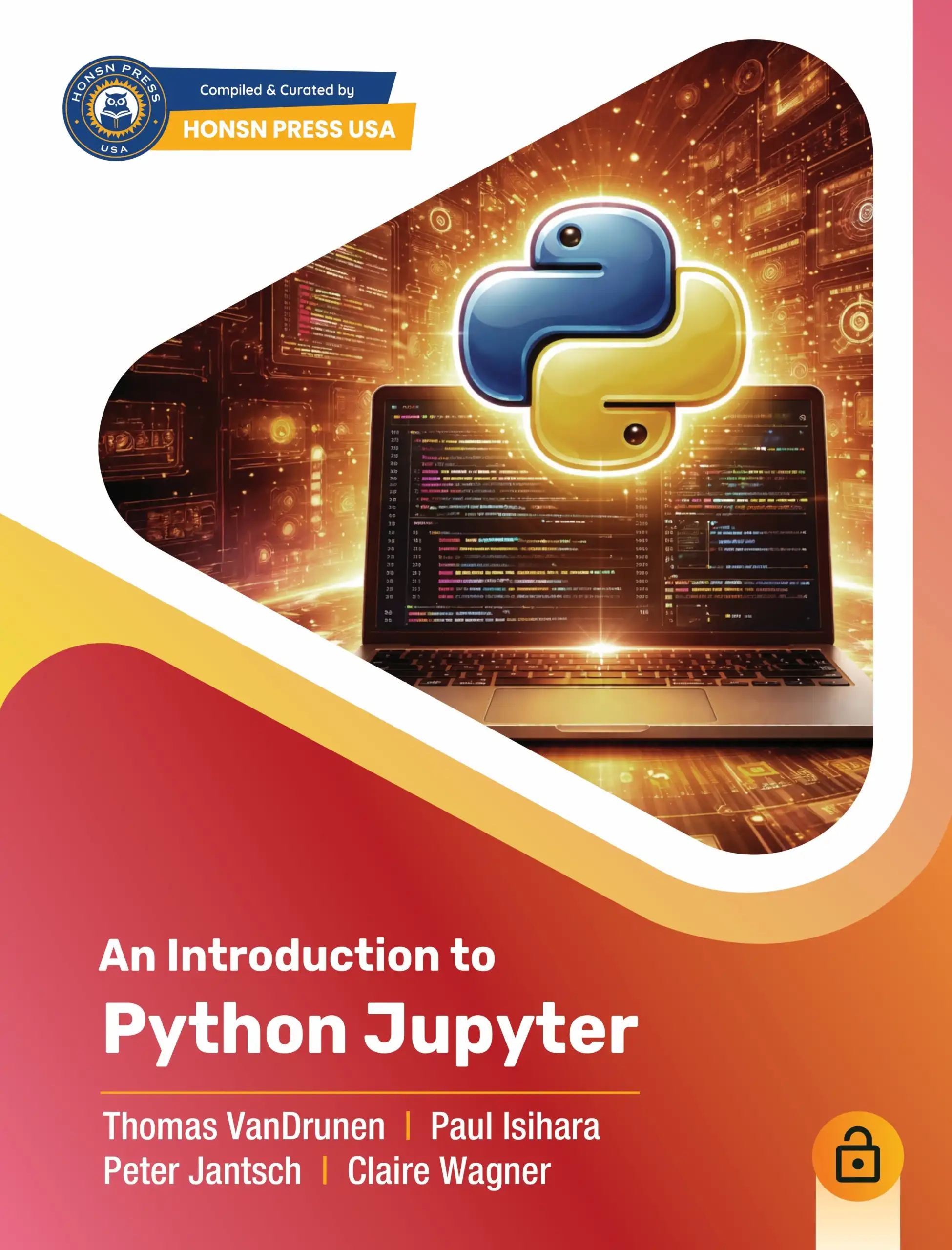


Description
An Introduction to Python Jupyter Notebooks for College Math Teachers” is a comprehensive and evolving classroom resource designed to bridge the gap between theoretical collegiate mathematics and practical computational application. This text serves as an essential guide for college math teachers and their students seeking to seamlessly integrate the power of Python and Jupyter Notebooks (JNBs) into their curriculum. Unlike traditional textbooks, this entire work is presented in the form of modular Jupyter Notebooks, with each section structured for interactive engagement. This format allows for the direct input and execution of Python code alongside explanatory text, charts, and multimedia resources, making mathematical concepts immediately demonstrable and reproducible.
The book’s core theme is to enrich and enliven the study of mathematics using this cutting-edge tool. It offers immense practical value by covering a wide range of collegiate mathematics, from foundational Python programming and Exploratory Data Analysis (EDA) to advanced topics in Calculus, Linear Algebra, Statistical Inference, Differential Equations, and Complex Variables. Crucially, it connects these abstract concepts to complex real-world societal applications, such as modeling disease spread (COVID-19), analyzing urban data, and groundwater flow. Each chapter is designed to be read independently and includes dedicated JNB labs with solutions, providing a flexible framework for experienced educators to modify and tailor content to their specific courses, ultimately serving as a useful starting point to harness computational power for mathematical education.
Salient Features
- Interactive Learning Format: The entire book is written as modular Jupyter Notebooks, allowing for immediate, interactive execution of code alongside explanatory content, which is ideal for classroom use.
- Comprehensive Curricula Integration: The content seamlessly integrates Python programming with core college mathematics, including Calculus, Linear Algebra, Probability, and Statistical Inference for multiple course levels.
- Foundational Coding Guide: Provides a detailed Python Programming Guide, introducing essential concepts like data types, control flow, functions, and working with libraries such as NumPy and Pandas.
- Applied Data Science: Dedicated chapters on Exploratory Data Analysis (EDA) and Advanced Data Analysis provide hands-on experience in real-world data investigation and text classification using Python.
- Societal Modeling Applications: Features extensive application-based chapters, such as using Differential Equations to model public health issues (e.g., COVID-19) and Complex Variables for groundwater analysis.
- Practical Lab Exercises: Every chapter includes a dedicated Jupyter Notebook Lab and corresponding solutions, offering practical exercises that teachers can customize and students can use for independent practice.
- Optimization & Systems: Explores modern quantitative techniques like Linear Algebra for Optimization, K-means Clustering, and introduces the fundamental concepts of Complex Systems and Statistical Physics.






Reviews
There are no reviews yet.