



Description
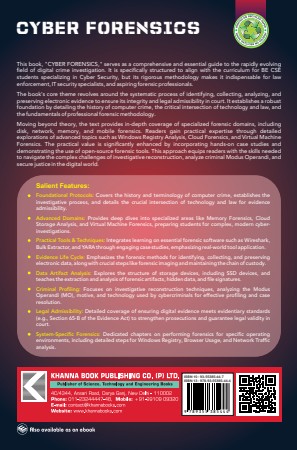
CYBER FORENSICS
This book,” CYBER FORENSICS,” serves as comprehensive and essential guide to the rapidly evolving field of digital crime investigation. It is specifically structured to align with the curriculum for BE CSE students specializing in cyber security, but its rigorous methodology makes it indispensable for law enforcement, IT security specialists, and aspiring forensic professionals.
The book’s core theme revolves around the systematic process of identifying, collecting, analyzing, and preserving electronic evidence to ensure its integrity and legal admissibility in court. It establishes a robust foundation by detailing the history of computer crime, the critical intersection of technology and law, and the fundamentals of professional forensic methodology.
Moving beyond theory, the text provides in-depth coverage of specialized forensic domains, including disk, network, memory, and mobile forensics. Readers gain practical expertise through detailed explorations of advanced topics such as window registry analysis, cloud forensics, and virtual machine forensics. The practical value is significantly enhanced by incorporating hands-on case studies and demonstrating the use of open-source forensic tools. This approach equips readers with the skills needed to navigate the complex challenges of investigative reconstruction, analyze criminal modus operandi, and secure justice in the digital world.
Salient Features:
- Foundational Protocols: covers the history and terminology of computer crime, establishes the investigative process, and details the crucial intersection of technology and law for evidence admissibility.
- Advanced Domains: Provides deep dives into specialized areas like memory forensics, cloud storage analysis, and virtual machine forensics, preparing students for complex, modern cyber-investigations.
- Practical Tools & Techniques: integrates learning on essential forensic software such as Wireshark, bulk extractor, and YARA through engaging case studies, emphasizing real-world tool application.
- Evidence Life Cycle: Emphasizes the forensic methods for identifying, collecting, and preserving electronic data, along with crucial steps like forensic imaging and maintaining the chain of custody.
- Data Artifact Analysis: Explores the structure of storage devices, including SSD devices, and teaches the extraction and analysis artifacts, hidden data, and file signatures.
- Criminal Profiling: Focuses on investigative reconstruction techniques, analyzing the modus operandi (MO), motive, and technology used by cybercriminals for effective profiling and case resolution.
- System-Specific Forensics: dedicated chapters on performing forensic for specific operating environments, including details steps for windows registry, Browser Usage, and network traffic analysis.







Reviews
There are no reviews yet.