


Description
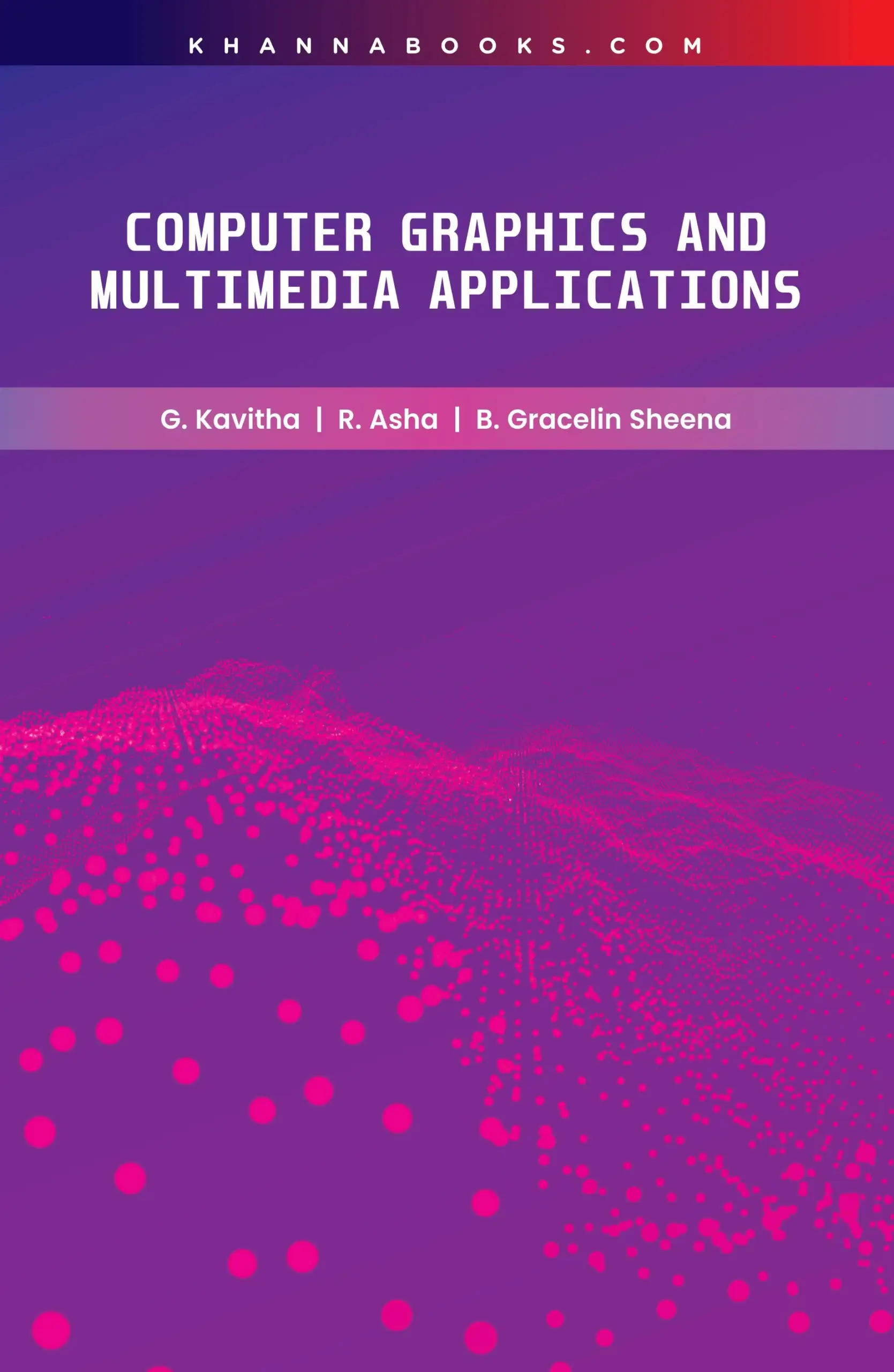
Computer Graphics And Multimedia Applications
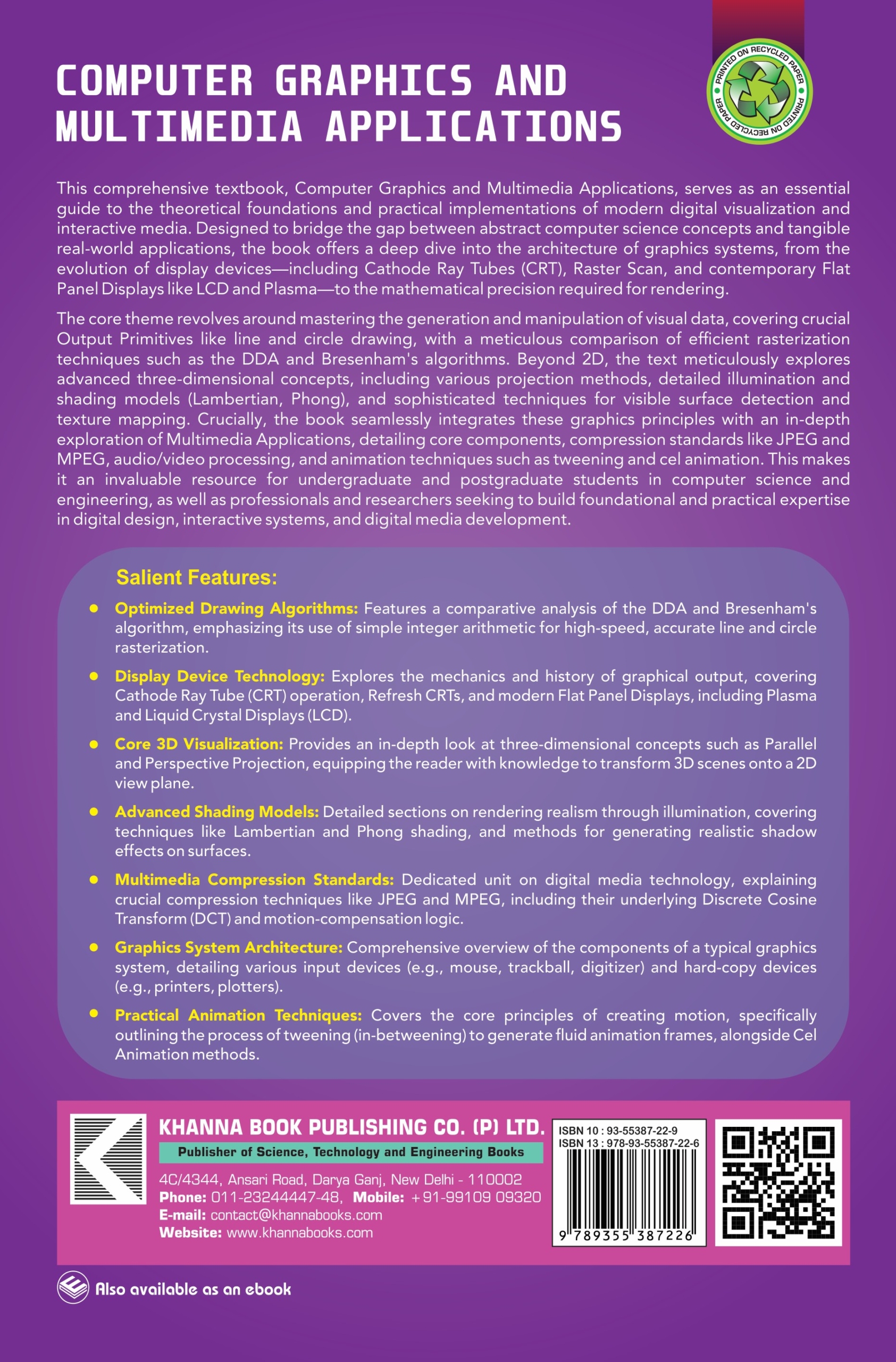
This comprehensive textbook, Computer Graphics and Multimedia Applications, serves as an essential guide to the theoretical foundations and practical implementations of modern digital visualization and interactive media. Designed to bridge the gap between abstract computer science concepts and tangible real-world applications, the book offers a deep dive into the architecture of graphics systems, from the evolution of display devices—including Cathode Ray Tubes (CRT), Raster Scan, and contemporary Flat Panel Displays like LCD and Plasma—to the mathematical precision required for rendering.
The core theme revolves around mastering the generation and manipulation of visual data, covering crucial Output Primitives like line and circle drawing, with a meticulous comparison of efficient rasterization techniques such as the DDA and Bresenham’s algorithms. Beyond 2D, the text meticulously explores advanced three-dimensional concepts, including various projection methods, detailed illumination and shading models (Lambertian, Phong), and sophisticated techniques for visible surface detection and texture mapping.
Crucially, the book seamlessly integrates these graphics principles with an in-depth exploration of Multimedia Applications, detailing core components, compression standards like JPEG and MPEG, audio/video processing, and animation techniques such as tweening and cel animation. This makes it an invaluable resource for undergraduate and postgraduate students in computer science and engineering, as well as professionals and researchers seeking to build foundational and practical expertise in digital design, interactive systems, and digital media development.
Salient Features
- Optimized Drawing Algorithms: Features a comparative analysis of the DDA and Bresenham’s algorithms, emphasizing the use of simple integer arithmetic for high-speed, accurate line and circle rasterization.
- Display Device Technology: Explores the mechanics and history of graphical output, covering Cathode Ray Tube (CRT) operation, Refresh CRTs, and modern Flat Panel Displays including Plasma and LCD.
- Core 3D Visualization: Provides an in-depth look at three-dimensional concepts such as Parallel and Perspective Projection, equipping the reader with knowledge to transform 3D scenes onto a 2D view plane.
- Advanced Shading Models: Detailed sections on rendering realism through illumination, covering techniques like Lambertian and Phong shading, and methods for generating realistic shadow effects on surfaces.
- Multimedia Compression Standards: Dedicated unit on digital media technology explaining crucial compression techniques like JPEG and MPEG, including their underlying Discrete Cosine Transform (DCT) and motion-compensation logic.
- Graphics System Architecture: Comprehensive overview of the components of a typical graphics system, detailing various input devices (e.g., mouse, trackball, digitizer) and hard-copy devices (printers, plotters).
- Practical Animation Techniques: Covers the core principles of creating motion, outlining the process of tweening (in-betweening) to generate fluid animation frames, alongside Cel Animation methods.











Reviews
There are no reviews yet.