



Description
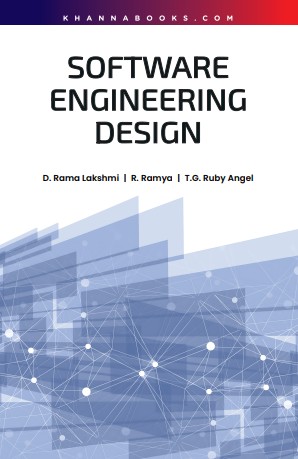
Software Engineering Design
Software Engineering Design is a comprehensive guide to the foundational discipline that dictates the success, scalability, and maintainability of all modern software systems. Recognizing that software design is at the heart of technological advancements, this essential resource transforms the complex challenges of system design into a structured, manageable process. Its core purpose is to bridge the gap between theoretical foundations and real-world applications, ensuring that readers gain both a vital conceptual understanding and practical expertise in creating robust software solutions.
The book covers the entire spectrum of the software development lifecycle. It begins with an exploration of various Software Life Cycle Models—from linear methods like the Waterfall Model to adaptive Agile methodologies. The text then provides a deep dive into Requirement Engineering, focusing on crucial tasks like requirements modeling (DFD, ERD) and rigorous validation, before moving into the central System Design phase. Here, readers learn about popular architectural paradigms (Layered, Data-Centered) and objective metrics, such as Coupling and Cohesion, used to measure the “goodness” of a design. The content concludes with a focus on Testing & Quality Assurance (Verification and Validation) and key management aspects, including risk mitigation (RMMM) and project estimation (COCOMO).
This text is specifically tailored for a broad audience: students beginning their academic journey, as well as experienced professionals and practitioners seeking to refine their design skills. By imparting technical knowledge and fostering a necessary design-oriented mindset, this book serves as an invaluable companion for building systems that are efficient, reliable, and sustainable.
Salient Features:
- Structured Life Cycles: Explore fundamental Software Life Cycle Models (Waterfall, Spiral, Prototyping) and modern, iterative approaches like Agile methodologies to ensure efficient project management and successful risk mitigation.
- Precise Requirements: Details the systematic process of Requirements Engineering, covering elicitation, visual modeling (DFD, ERD), and rigorous validation to align the final product with core business and user needs.
- Core Design Architectures: Focuses on System Design principles, exploring essential architectural paradigms such as Layered Systems, Data-Centered Systems, and the critical transition from requirements analysis to a final blueprint.
- Design Quality Metrics: Provides essential methods for quantifying design effectiveness, specifically detailing the metrics of Coupling and Cohesion to guide students and professionals toward building maintainable and robust software.
- Quality Assurance & Testing: Integrates the continuous processes of Verification and Validation (V&V), covering the various Levels of Testing and approaches (Functional/Non-Functional) required to achieve a high-performance system.
- Project Management Tools: Covers Umbrella Activities such as Risk Management (RMMM), Software Quality Assurance (SQA), and project cost/time estimation using industry models like the well-known COCOMO model.
- Evolution & Reengineering: Discusses software evolution through different forms of Maintenance (Corrective, Adaptive, Preventive) and the techniques of Software Reengineering to enhance system longevity and scalability.
- Agile and DevOps Focus: Offers a practical overview of Agile methodologies (Scrum, Kanban, Lean) and the principles of DevOps to facilitate rapid development, continuous integration, and seamless collaboration across teams.








Reviews
There are no reviews yet.