



Description
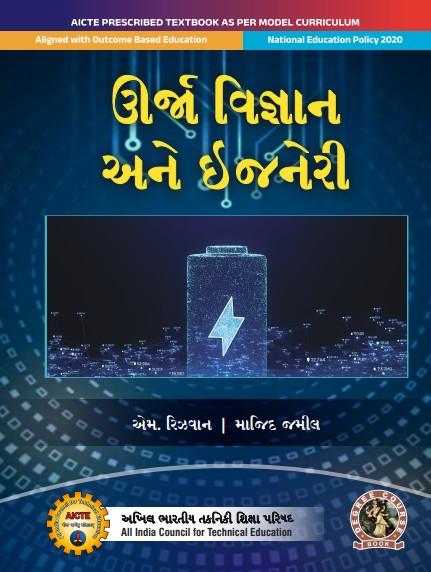
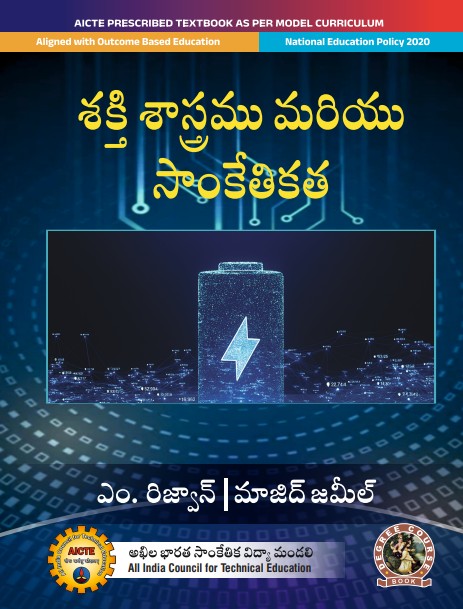
Energy Science and Engineering
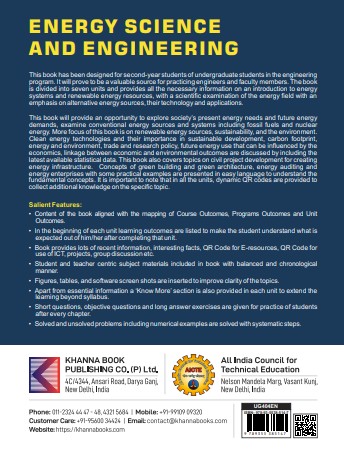
This book has been designed for second-year students of undergraduate students in the engineering program. It will prove to be a valuable source for practicing engineers and faculty members. The book is divided into seven units and provides all the necessary information on an introduction to energy systems and renewable energy resources, with a scientific examination of the energy field with an emphasis on alternative energy sources, their technology and applications.
This book will provide an opportunity to explore society’s present energy needs and future energy demands, examine conventional energy sources and systems including fossil fuels and nuclear energy. More focus of this book is on renewable energy sources, sustainability, and the environment. Clean energy technologies and their importance in sustainable development, carbon footprint, energy and environment, trade and research policy, future energy use that can be influenced by the economics, linkage between economic and environmental outcomes are discussed by including the latest available statistical data. This book also covers topics on civil project development for creating energy infrastructure. Concepts of green building and green architecture, energy auditing and energy enterprises with some practical examples are presented in easy language to understand the fundamental concepts. It is important to note that in all the units, dynamic QR codes are provided to collect additional knowledge on the specific topic.
Salient Features:
- Content of the book aligned with the mapping of Course Outcomes, Programs Outcomes and Unit Outcomes.
- In the beginning of each unit learning outcomes are listed to make the student understand what is expected out of him/her after completing that unit.
- Book provides lots of recent information, interesting facts, QR Code for E-resources, QR Code for use of ICT, projects, group discussion etc.
- Student and teacher centric subject materials included in book with balanced and chronological manner.
- Figures, tables, and software screen shots are inserted to improve clarity of the topics.
- Apart from essential information a ‘Know More’ section is also provided in each unit to extend the learning beyond syllabus.
- Short questions, objective questions and long answer exercises are given for practice of students after every chapter.
- Solved and unsolved problems including numerical examples are solved with systematic steps.






Reviews
There are no reviews yet.