


Description
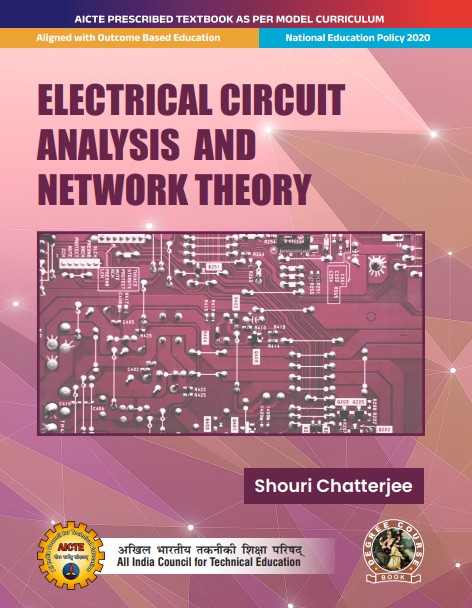
Electrical Circuit Analysis and Network Theory
This introductory text book on Circuit Theory is designed for all second year (sophomore year) undergraduate students in Electrical and Electronics and Communications Engineering. The book follows the AICTE curriculum for both Electrical Circuit Analysis (PCC-EE01) and Network Theory (Ec06).
It is Expected that the EE/EC students will take up this book at the very beginning of his/her second year. The objective of the text book is to prepare the students for (1) power engineering, (2) power electronics, (3) communications engineering, (4) analog electronics, (5) control engineering, and (6) microwave engineering.
One of the features of the book is the guided use of numeral packages, such as MATLAB ® and Octave. These tools have deep relevance in Engineering and the Science today. The book exposes the student to these tools at a very early stage in his/her undergraduate journey. Full Octave programs for analysis with Laplace and Fourier transforms have been given. Project ideas for the development of an Octave-based circuit simulator have also been shown.
With approximately 100 worked out problems, approximately 200 exercises, and over 250 illustrations, the author hopes the textbook will add value to the students” understanding of circuits
and systems.
Salient Features:
- Content of the book aligned with the mapping of Course Outcomes, Programs Outcomes and Unit.
- In the beginning of each unit learning outcomes are listed to make the student understand what is expected out of him/her after completing that unit.
- Book provide lots of recent information, interesting facts, QR Code for E-resources, QR Code for use of ICT, project, group discussion etc.
- Student and Teacher centric subject materials included In book with balanced and chronological manner.
- Figures, tables and software screenshots are inserted to improve clarity of the topics.
- Apart from essential information a Know More’ section is also provided in each unit to extend the learning beyond syllabus.
- Short questions, objective questions and long answer exercises are given for practice of students after every chapter.
- Solved and unsolved problems including numerical examples are solved with systematic steps.








Reviews
There are no reviews yet.